Prairie Restoration and Dung Beetles
|
For my M.S. thesis, I was interested in how tallgrass prairie restoration management practices affected the dung beetle community and ecosystem functioning.
Specifically, I investigated how time since restoration, use of prescribed fire, and reintroduction of bison affected the dung beetle community. I evaluated the dung beetle community in terms of taxonomic diversity as well as functional diversity, and I quantified the ecosystem function of dung decomposition facilitated by dung beetles. |
|
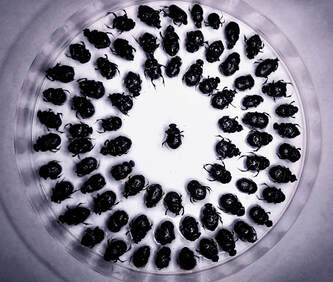
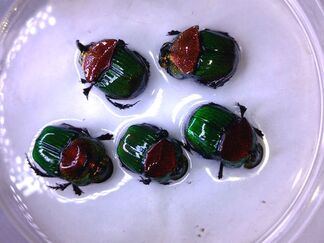
As expected, sites with reintroduced bison harbored a larger and more diverse dung beetle community than sites without bison. I discovered that the functional diversity approach to evaluating the dung beetle community provided a more accurate picture than traditional taxonomic diversity. The full results can be seen in the published manuscript.
|
|
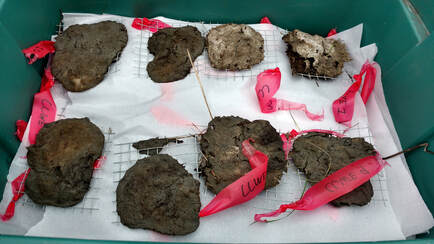
This project was part of the ReFuGE Project and conducted at the Nachusa Grasslands in 2017-2018. Methods employed included pitfall trapping and a dung decomposition assay. This research was supported by the NSF (through the ReFuGE project), Northern Illinois University, The Friends of Nachusa Grasslands, and Prairie Biotic, Inc.
